

12 Beginner-Friendly Ways to Create Multiple Revenue Streams as a Freelancer
If you’re new to freelancing, relying on a single client or one type of work can feel risky. The good news is that building multiple revenue streams doesn’t require advanced skills or a huge investment. This guide will walk you through twelve approachable methods to diversify your income, each designed with beginners in mind. You’ll learn practical strategies that are easy to start today, helping you build financial stability while you grow your freelance career.
- Start Selling Services on Legiit
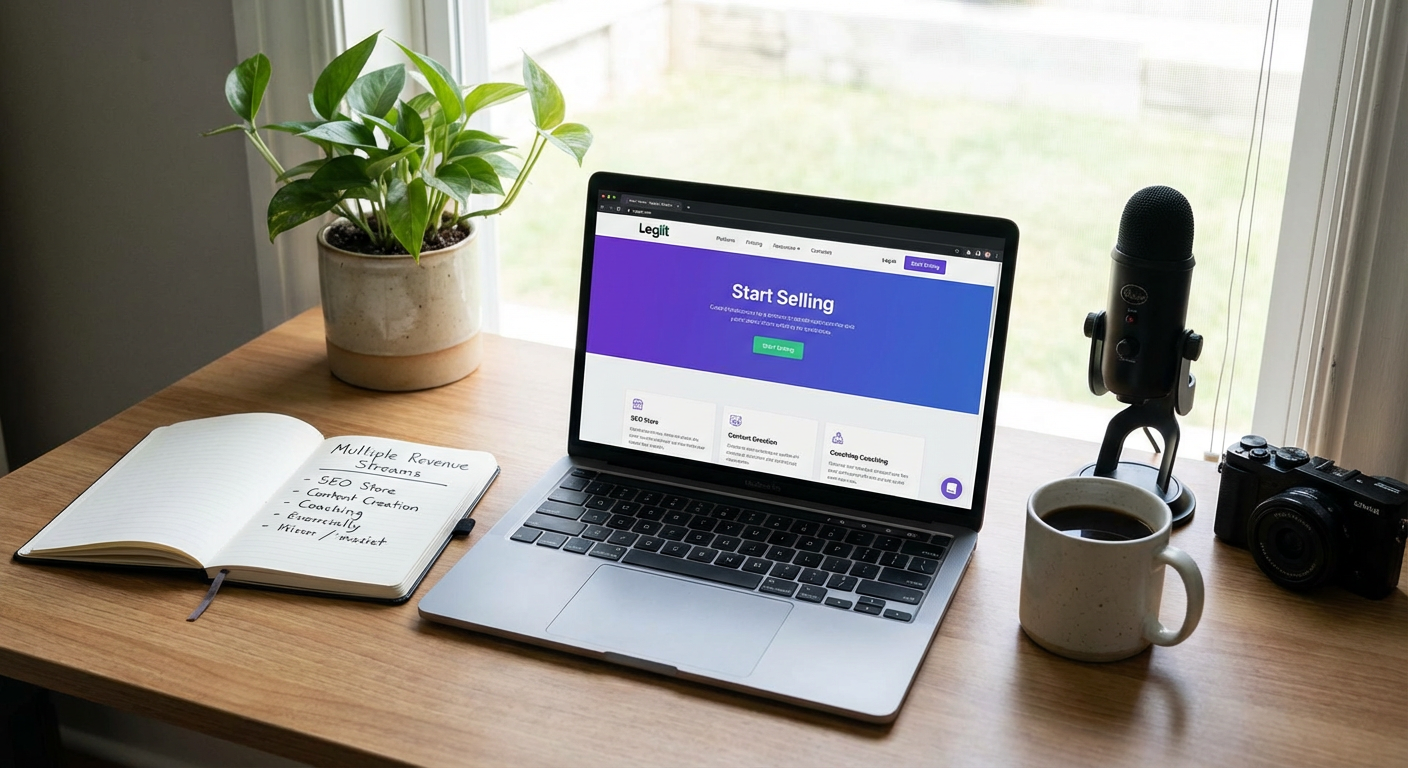
Legiit is a marketplace built specifically for freelancers who want to sell digital services without the hassle of complex setup. You create simple service listings, set your prices, and clients come to you. The platform handles payments and provides a built-in audience of buyers looking for everything from content writing to graphic design.
What makes Legiit particularly good for beginners is its straightforward interface and supportive community. You don’t need to worry about building a website or finding your first clients from scratch. Just list what you can do, write a clear description, and start accepting orders. Many freelancers use it as their first reliable income stream while they build other revenue sources.
- Offer Simple Retainer Packages

Retainer agreements might sound complicated, but they’re actually one of the easiest ways to create predictable monthly income. Start by identifying clients who need regular help with tasks you already do well. Offer them a package where they pay you the same amount each month for a set number of hours or deliverables.
For example, if you’re a writer, you could offer a blog retainer with four articles per month. If you design social media graphics, bundle ten graphics per month at a fixed rate. Retainers take the guesswork out of budgeting because you know exactly what’s coming in each month. Even landing one or two small retainers can stabilize your income while you pursue other opportunities.
- Create and Sell Simple Digital Templates
Digital templates are products you create once and sell repeatedly with no extra work. Think resume templates, social media post designs, email newsletter layouts, or spreadsheet trackers. You don’t need fancy software to start. Tools like Canva make it easy to design professional templates even if you have no design background.
Once you’ve made a few templates, list them on platforms like Etsy, Gumroad, or Creative Market. Price them affordably to attract buyers, and write clear descriptions explaining what’s included. As your template library grows, so does your passive income. This approach works especially well because you’re building an asset that keeps generating money long after the initial work is done.
- Teach What You Know Through Mini Courses
You don’t need to be an expert to teach something valuable. If you’ve learned a skill that others want to know, you can package that knowledge into a short course. Focus on solving one specific problem rather than trying to cover everything about a topic.
Platforms like Teachable, Thinkific, and Skillshare make course creation accessible for beginners. Start with a simple video course or even a PDF guide with step-by-step instructions. For example, if you’ve figured out how to land freelance clients on LinkedIn, that’s a course. If you know how to edit videos using free software, that’s another course. Price your first course modestly to get students and testimonials, then build from there.
- Flip Your Skills Into Coaching or Consulting
Once you’ve gained some experience in your field, other beginners will pay for your guidance. You can offer one-on-one coaching calls where you help people solve specific problems or review their work. This doesn’t require certification or years of experience, just practical knowledge and the ability to explain things clearly.
Start by offering affordable 30-minute sessions on platforms like Clarity.fm or simply through direct booking via Calendly. You might help writers improve their pitches, show designers how to streamline their workflow, or guide new freelancers through setting up their business. Coaching is flexible and can fit around your other work, making it an ideal supplementary income stream.
- Write and Monetize a Simple Newsletter
Email newsletters have become a legitimate income source, and starting one is simpler than maintaining a blog. Pick a topic you know well and can write about consistently, then use a free platform like Substack or ConvertKit to collect subscribers.
You can monetize a newsletter in several ways without needing thousands of subscribers. Offer a paid tier with extra content, include affiliate links to products you recommend, or sell sponsored spots to relevant businesses. The key for beginners is consistency. Send valuable content regularly, even if it’s just once a week, and your subscriber list will grow. Over time, even a modest list can generate meaningful income through various channels.
- Join Affiliate Programs Related to Your Niche
Affiliate marketing lets you earn commissions by recommending products or services you already use and trust. As a freelancer, you likely use various tools for project management, design, writing, or communication. Many of these companies have affiliate programs that pay you when someone signs up through your link.
Start by making a list of tools you genuinely recommend. Check if they offer affiliate programs, then apply. Share your affiliate links naturally in your content, whether that’s blog posts, social media, your newsletter, or even in conversations with other freelancers. You’re not selling anything new, just getting compensated for recommendations you’d make anyway. The income starts small but compounds as you build more content and reach.
- Repurpose Your Work Into Low-Cost Products
Look at the work you’ve already created for clients and consider how you can repackage it into products. If you write blog posts, compile your best work into an ebook. If you create designs, turn popular elements into clip art or icon sets. If you take photos, license them on stock photo sites.
The advantage here is that you’re not starting from zero. You already have the raw material. With minor modifications to remove client-specific details, you can transform past projects into sellable products. This works particularly well for freelancers who’ve been working for a while and have a portfolio to draw from. It’s one of the easiest ways to extract more value from work you’ve already done.
- Offer Group Workshops Instead of Individual Services
Group workshops let you serve multiple clients at once, multiplying your hourly rate without multiplying your effort. Instead of doing five one-on-one sessions, host one workshop with five participants. You earn more while each participant pays less than they would for individual attention.
For beginners, start with simple topics you can teach in 60 to 90 minutes. Use Zoom for delivery and Eventbrite or your social media to promote the event. A web designer might host a workshop on choosing the right website platform. A copywriter could teach small business owners how to write better product descriptions. Keep the group size small at first so you can manage questions easily. As you get comfortable, scale up.
- License Your Creative Work
If you produce creative content like photography, illustrations, music, or video footage, licensing offers a way to earn from the same piece multiple times. Upload your work to platforms like Shutterstock, Adobe Stock, or Pond5, and earn royalties each time someone downloads it.
The setup is straightforward. Create an account, upload your best work with relevant keywords, and the platform handles everything else. You won’t get rich overnight, but as your portfolio grows, so does your potential for passive income. This works especially well as a side stream because it requires minimal ongoing effort once you’ve uploaded your content. Focus on creating quality work in popular categories, and the downloads will follow.
- Build a Membership Community
Membership communities provide recurring revenue by giving people access to exclusive content, resources, or support. As a freelancer, you can create a community around your expertise where members pay a monthly fee for ongoing value.
Platforms like Circle, Mighty Networks, or even a private Facebook group combined with a Patreon make this accessible for beginners. Your membership might include monthly training videos, templates, feedback on work, or simply a supportive space for people in your field. Start small with a low price point and a handful of members. As you learn what your community values most, you can grow the offering and the price. The recurring nature of memberships makes them particularly valuable for income stability.
- Partner With Other Freelancers on Bundled Services
Collaboration can open revenue streams you couldn’t access alone. Find freelancers with complementary skills and create bundled service packages that you market together. A writer and designer could offer complete blog packages. A web developer and copywriter could sell landing page bundles.
This approach works well for beginners because you split the work and the client acquisition effort. You can charge more for the complete package than you would for your individual service, and clients appreciate the convenience of working with a coordinated team. Start by reaching out to freelancers you already know and trust, discuss what you could offer together, and test it with a few clients. If it works, you’ve added a new revenue stream without having to learn an entirely new skill yourself.
Building multiple revenue streams as a freelancer doesn’t have to be overwhelming. Start with one or two methods from this list that match your current skills and interests. As those begin generating income, add another stream. The goal isn’t to do everything at once, but to gradually build a diverse income foundation that protects you from the ups and downs of freelance work. Each new stream you add makes your business more stable and gives you more freedom to choose the work you actually want to do.