
Zero-Click SEO Tactics Compared: 12 Strategies for Brand Visibility Without the Click
Zero-click searches are changing how people find information online. Instead of clicking through to a website, users get answers directly on the search results page. This shift means businesses need to rethink how they approach visibility. This guide compares different zero-click SEO tactics, weighing their strengths and weaknesses so you can decide which strategies deserve your time and resources. Whether you’re working with a tight budget or have room to experiment, understanding the trade-offs will help you make smarter decisions about your brand presence.
- Legiit Services Versus In-House SEO Teams

When you need zero-click SEO expertise, you face a choice between hiring specialists through platforms like Legiit or building an in-house team. Legiit connects you with experienced freelancers who specialize in structured data, featured snippet optimization, and knowledge panel management. The main advantage is flexibility. You pay for specific projects without the overhead of salaries and benefits, and you can scale up or down based on results.
The trade-off comes down to control and continuity. In-house teams know your brand deeply and can respond instantly to changes. However, they cost significantly more and may lack specialized skills in certain areas. Legiit freelancers bring focused expertise and often work faster on technical implementations, but they require clear communication and project briefs. For most small to mid-sized businesses, the cost savings and specialized knowledge available through Legiit make it a practical starting point, especially when testing which zero-click tactics work best for your brand.
- Featured Snippets Versus People Also Ask Boxes
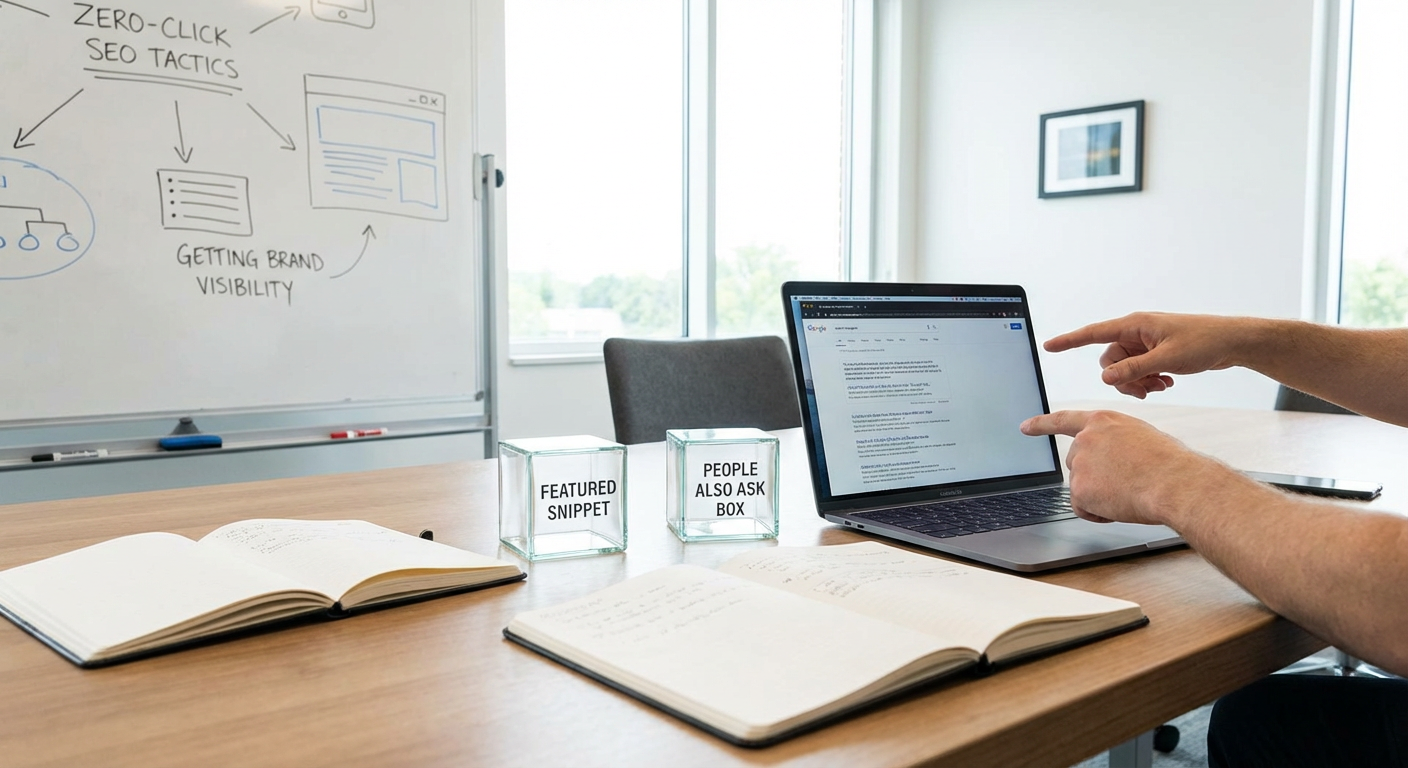
Featured snippets and People Also Ask boxes both appear prominently in search results, but they serve different purposes and require different approaches. Featured snippets provide a single, definitive answer to a query, often pulling from one source. They sit at position zero and capture significant visibility. The downside is that only one result wins this spot, making it highly competitive.
People Also Ask boxes, on the other hand, display multiple related questions with expandable answers. You can appear multiple times within these boxes if you’ve answered several related questions well. This makes them somewhat easier to capture, though each individual appearance carries less weight than a featured snippet. Featured snippets work best for high-volume, specific queries where you have authoritative content. People Also Ask boxes shine when you’ve created comprehensive content that addresses a topic from multiple angles. Many successful strategies target both, but if you’re starting out, People Also Ask boxes offer more opportunities to gain initial traction.
- Google Business Profile Optimization Versus Bing Places
Google Business Profile dominates local search, but Bing Places for Business deserves consideration, especially for certain demographics. Google Business Profile offers superior visibility, detailed analytics, and integration with Google Maps. Most consumers search on Google, making it the obvious priority. The platform also provides more features for customer interaction, including messaging and booking.
Bing Places attracts an older, often more affluent audience and powers search results for voice assistants like Alexa. It requires less effort to rank well since competition is lower. However, the overall traffic volume pales in comparison to Google. The smart approach is to optimize your Google Business Profile first, ensuring your NAP information, categories, photos, and reviews are excellent. Then, duplicate this effort to Bing Places. The time investment is minimal once you’ve done the work for Google, and you capture visibility across both platforms. Ignoring Bing entirely means leaving free visibility on the table, but it should never come before Google optimization.
- Schema Markup: Manual Implementation Versus Plugin Solutions
Schema markup helps search engines understand your content and increases your chances of appearing in rich results. You can add it manually by editing your site’s code or use plugins that automate the process. Manual implementation offers complete control and allows you to create precisely the markup you need without bloating your site with unnecessary code. This approach works well if you have development skills or work with a technical team.
Plugins like Schema Pro or Rank Math make schema accessible to non-technical users. They provide user-friendly interfaces and automatically generate markup for common content types. The downside is that plugins can slow down your site, create redundant code, or limit your options to preset templates. They also add another dependency that needs updates and maintenance. For simple websites with standard content types, plugins provide good value and speed up implementation. For complex sites or those where performance is critical, manual implementation or hiring a developer produces cleaner, faster results. Consider your technical comfort level and site complexity when choosing your path.
- Knowledge Panel Management: Self-Claimed Versus Third-Party Verification
Knowledge panels display information about your brand directly in search results, offering prime visibility without requiring a click. You can claim and manage your panel through Google’s verification process, or you can rely on third-party sources like Wikipedia, Wikidata, and Crunchbase to populate it. Self-claiming gives you direct control over certain elements like your description and social profiles, ensuring accuracy and quick updates.
The challenge is that Google may still pull information from other sources even after you’ve claimed your panel, sometimes overriding your preferred content. Building a presence on authoritative third-party sites like Wikipedia creates a stronger foundation. Wikipedia entries carry significant weight with Google’s algorithms, but they require notability and adherence to strict editorial guidelines. Not every business qualifies. The best strategy combines both approaches. Claim your panel for immediate control, then work toward building your presence on relevant third-party platforms. This dual approach creates redundancy and signals to Google that your information is consistent and reliable across multiple trusted sources.
- Video Content: YouTube Optimization Versus Native Platform Videos
Video results appear frequently in search results, offering another zero-click opportunity through thumbnails, titles, and preview information. YouTube videos dominate these results because Google owns YouTube and prioritizes it in search. Optimizing YouTube content means better visibility in both YouTube search and Google search. You also benefit from YouTube’s massive built-in audience and recommendation algorithm.
Native videos on Facebook, LinkedIn, or Instagram may engage your existing audience better but rarely appear in Google search results. They keep users on those platforms, which helps with social engagement but does nothing for your search visibility. The trade-off is clear. YouTube requires more effort to build an audience from scratch, but it pays off in search visibility. Native platform videos work better for nurturing existing followers. If zero-click search visibility is your goal, YouTube should receive the majority of your video marketing effort. You can always repurpose YouTube content to other platforms, capturing both search visibility and social engagement without doubling your production workload.
- Answer Boxes: Long-Form Content Versus Concise Definitions
Search engines pull answer box content from web pages, but the ideal content structure depends on the query type. Long-form comprehensive guides allow you to target multiple related queries and provide depth that establishes authority. They work well for complex topics where users need detailed explanations. The downside is that search engines may struggle to extract a clear, concise answer from lengthy content, reducing your chances of appearing in answer boxes.
Concise, definition-style content makes it easy for search engines to identify and extract the perfect snippet. You can structure paragraphs specifically to answer common questions in 40 to 60 words, dramatically increasing your chances of selection. However, thin content lacks the depth needed to rank well organically or keep visitors engaged if they do click through. The winning approach combines both. Create comprehensive content that covers a topic thoroughly, but structure it with clear subheadings and concise opening paragraphs under each section. This gives search engines easy-to-extract snippets while providing depth for readers who want more information.
- Local Pack Visibility: Review Quantity Versus Review Quality
The local pack shows three businesses for local searches, appearing prominently in search results. Reviews play a significant role in rankings and click-through decisions. The debate centers on whether you should focus on accumulating many reviews or ensuring each review is detailed and positive. High review counts signal popularity and active customer engagement. Google’s algorithm considers review velocity and total number when ranking local results.
Quality matters too, though. Detailed, authentic reviews that mention specific services or products provide more value to potential customers and may carry more weight than generic five-star ratings. Recent reviews matter more than old ones, regardless of quantity. The practical answer is that you need both, but the priority shifts based on your current position. If you have fewer than 20 reviews, focus on quantity to build credibility. Once you reach that threshold, shift your energy toward encouraging detailed, specific reviews. Train your team to ask customers to mention particular aspects of their experience. This combination builds both the volume that algorithms reward and the detail that converts searchers into customers.
- FAQ Schema Versus Q&A Pages
Both FAQ schema and dedicated Q&A pages can capture visibility in search results, but they serve different strategic purposes. FAQ schema markup allows you to tag questions and answers on any page, making them eligible to appear as rich results. This works well for product pages, service pages, or blog posts where you want to address common questions related to that specific content. Implementation is straightforward, and it adds value without requiring separate pages.
Dedicated Q&A pages create comprehensive resources that can rank for multiple question-based queries. They provide better user experience for people seeking detailed answers and can attract backlinks. The downside is that they require more content creation and may dilute your site’s focus if not well-organized. FAQ schema offers quick wins with minimal effort, making it ideal for immediate implementation. Q&A pages work better as part of a content strategy where you’re building authority around specific topics. Many successful sites use both, applying FAQ schema to transactional pages while maintaining separate, in-depth Q&A resources for informational queries. Start with schema for your existing important pages, then expand to dedicated Q&A content as resources allow.
- Voice Search Optimization Versus Traditional Search Optimization
Voice search queries tend to be longer and more conversational than typed searches, leading some marketers to create separate content strategies. Voice search optimization focuses on natural language, question phrases, and local intent. It prioritizes featured snippets since voice assistants often read these aloud as answers. This approach captures the growing voice search market but requires additional content creation and keyword research.
Traditional search optimization targets shorter, more direct keywords that people type. It has a proven track record and targets the larger search market. The good news is that these strategies overlap significantly. Content optimized for featured snippets works well for voice search. Natural, conversational writing helps both. Creating separate strategies wastes resources on marginal differences. Instead, incorporate voice search considerations into your existing SEO work. Add conversational question phrases to your keyword research. Structure content to answer questions directly. Optimize for local intent where relevant. This integrated approach captures both markets without doubling your workload or fragmenting your content strategy.
- Image Pack Optimization Versus Traditional Image SEO
Image packs appear in search results for visual queries, displaying a row of images above or within the standard results. Optimizing for image pack inclusion requires different tactics than general image SEO. Image pack optimization prioritizes relevance to commercial and informational queries, high-quality images with proper dimensions, and strong signals from the hosting page. Images need descriptive filenames, alt text, and surrounding context that clearly indicates what they show.
Traditional image SEO focuses on ranking within Google Images itself, where users browse galleries of results. This requires similar optimization but emphasizes factors like image size, load speed, and the overall authority of your domain. Traffic from Google Images tends to be less targeted than image pack traffic. The key difference is intent. Image pack optimization targets users actively searching for information or products in standard search. Google Images attracts users specifically looking for visual content. If your business relies on visual appeal, like restaurants, real estate, or products, image pack optimization delivers better returns. Optimize your most important images for pack inclusion first, ensuring they appear on relevant, well-optimized pages. Then extend image SEO best practices across your entire site.
- Building Authority: Guest Posting Versus Creating Original Research
Authority signals help search engines decide whether to feature your content in zero-click results. Two common strategies for building authority are guest posting on established sites and creating original research or data. Guest posting places your expertise in front of established audiences and earns backlinks from reputable domains. It’s relatively straightforward and provides immediate benefits. The downside is that it’s time-intensive, competitive sites have high standards, and the direct SEO value of guest posts has diminished as the practice has become more common.
Creating original research, surveys, or data studies positions you as a primary source. Other sites link to your research, journalists cite it, and search engines recognize you as an authority. This approach builds long-term value and can generate ongoing backlinks and mentions. However, it requires significant resources to conduct valid research, analyze data, and present findings professionally. For most businesses, a mixed approach makes sense. Guest post strategically on high-authority sites in your niche to build initial visibility and relationships. Simultaneously, invest in at least one or two original research projects per year that establish you as a knowledge leader. The research becomes evergreen content that continues building authority, while guest posts provide steady relationship-building and short-term visibility boosts.
Zero-click SEO requires a different mindset than traditional search optimization. Instead of focusing solely on getting clicks to your website, you’re building visibility and brand recognition directly in search results. The tactics compared in this guide each offer distinct advantages and limitations. Your best strategy depends on your resources, technical capabilities, and business goals. Start with the approaches that match your current situation, test what works for your specific audience, and adjust based on results. Remember that zero-click visibility and traditional SEO aren’t opposites. They work together to build a comprehensive search presence that serves your brand at multiple touchpoints. Pick a few tactics from this list, implement them well, and expand your efforts as you see what resonates with your audience.